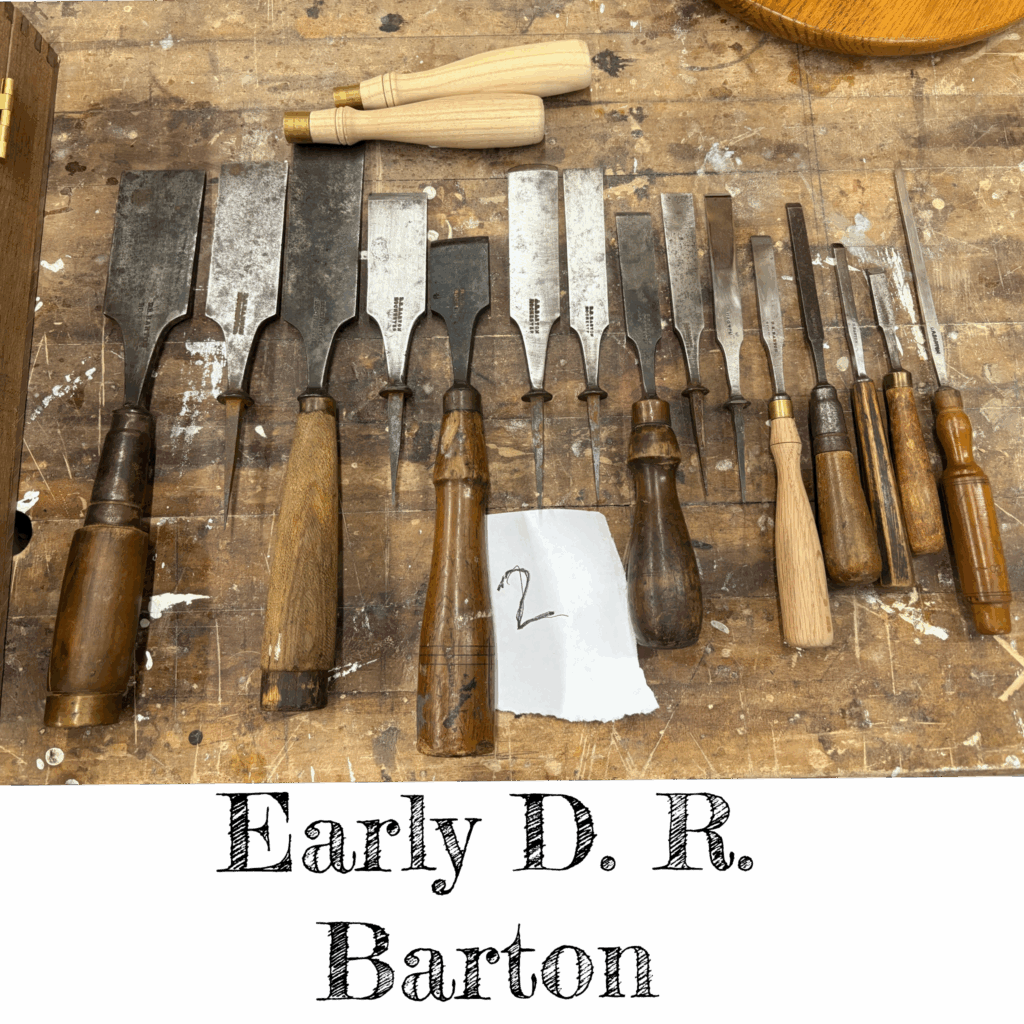
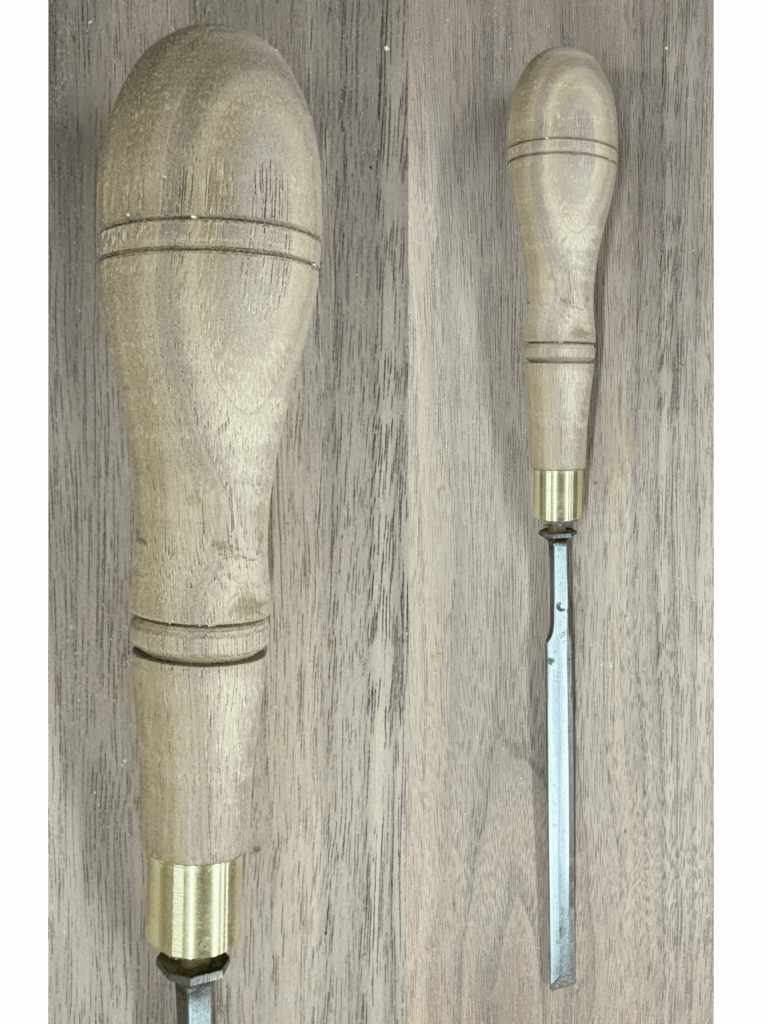
I recently shared that I had 22 sets of David R. Barton’s Chisels, Gouges and Turning Chisels.
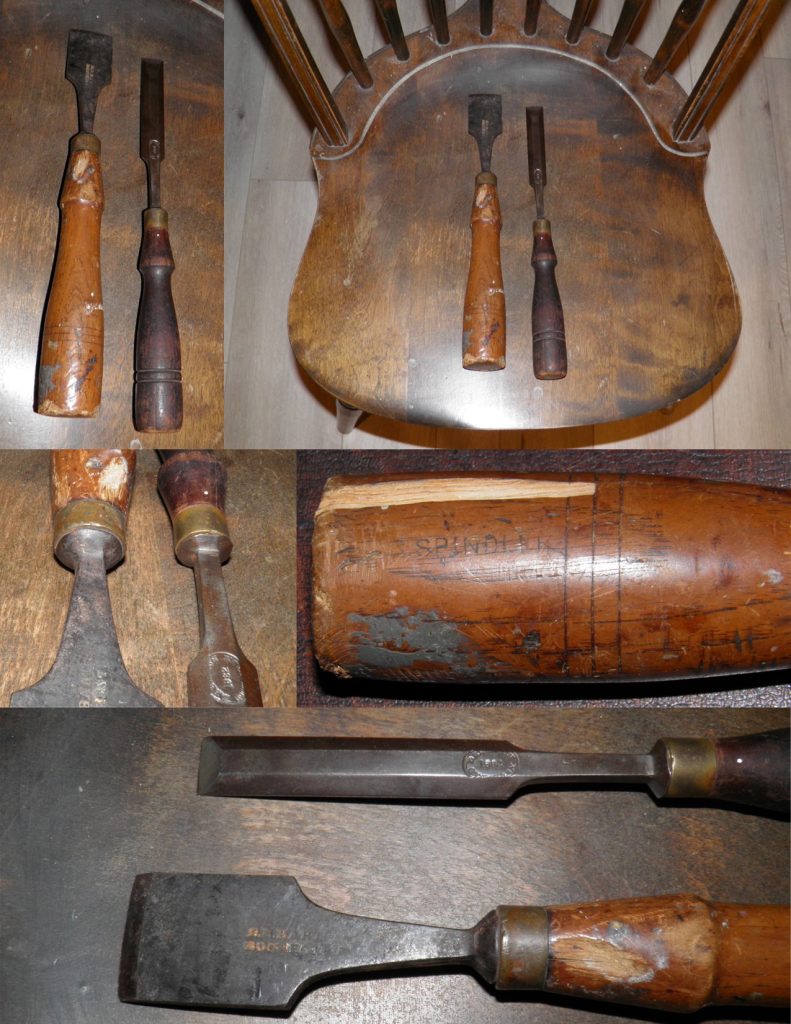
I believe the above set to be comprised of the oldest Bartons made.
I hope to improve on this set with new handles, a box or leather roll & a sharp edge.
Early Chisel Discovery
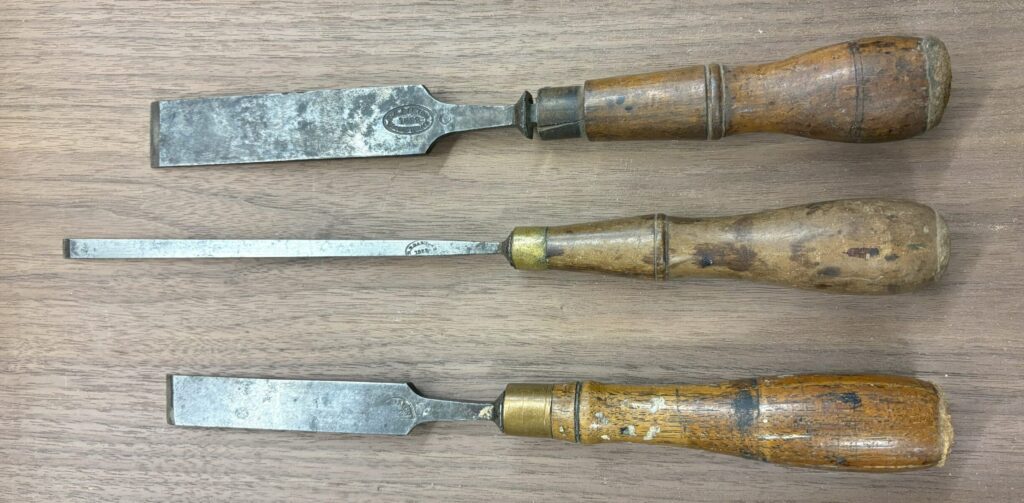
One of the most telling discoveries in the study of early D. R. Barton chisels reveals itself not through branding alone, but through form, proportion, and subtle handwork.
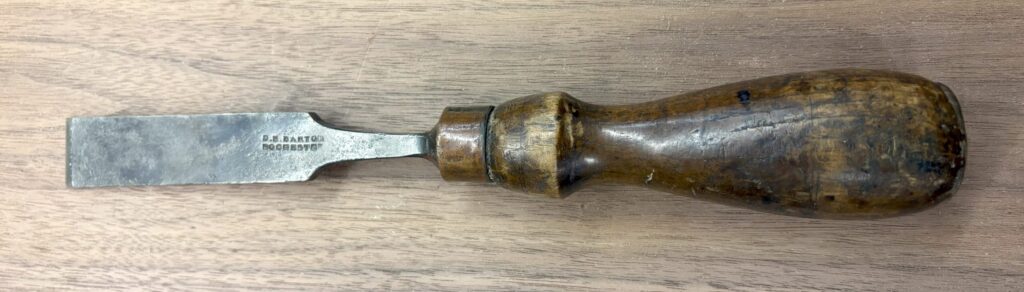
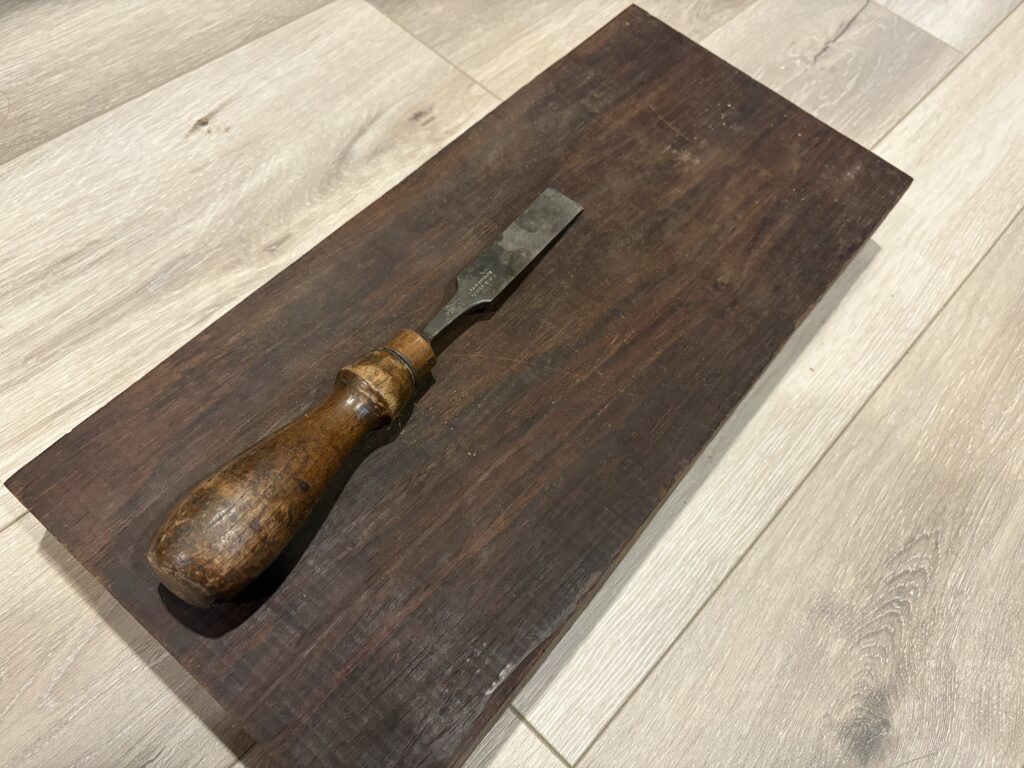
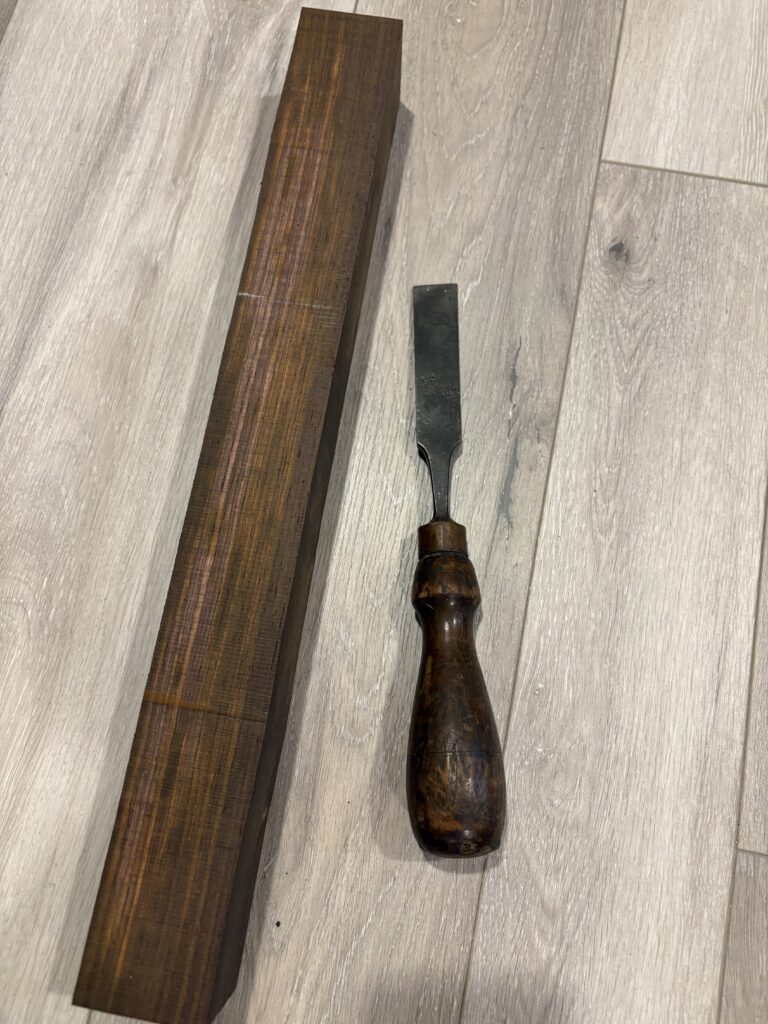
At first glance, this chisel stands apart. The blade is notably short, while the handle is unusually long—an imbalance by modern standards, yet entirely purposeful in its time. More revealing still is the crown of the tang. Rather than the familiar eight flat facets seen on later Barton chisels, this example features a smoothly rounded crown. That rounded termination is the first quiet signal that we are looking at an earlier piece.
Some might argue that a previous owner ground the crown smooth through years of use or modification. While possible, the evidence points elsewhere. The chisel bears the early stamp “D. R. Barton” alongside “Rochester”, placing its manufacture shortly after Barton’s move to Rochester—a pivotal chapter in his development as a toolmaker.
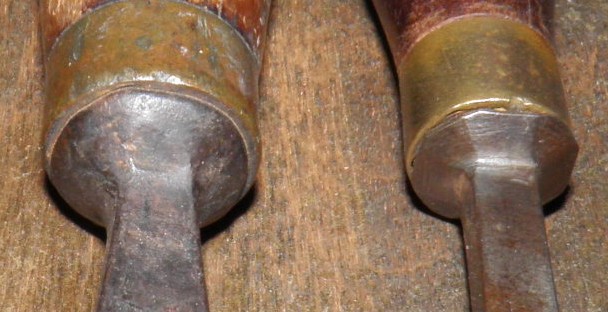
Barton arrived in Rochester around 1824, seeking to acquire the specialized skills and industrial knowledge needed to manufacture cut nails. This chisel likely dates to just a few years after that move, when Barton was still refining his processes and before later standardization took hold. The rounded crown, long handle, and early stamp together suggest a tool made during a formative period—when craftsmanship still leaned heavily on handwork rather than repeatable factory geometry.
Seen in this light, the chisel becomes more than a shop tool. It represents a moment of transition: early American edge-tool making on the cusp of industrial maturity. As we approach the 200-year centennial milestone tied to Barton’s Rochester beginnings, details like these remind us that progress often leaves its clearest record not in ledgers or patents, but in steel shaped by a maker still finding his way.