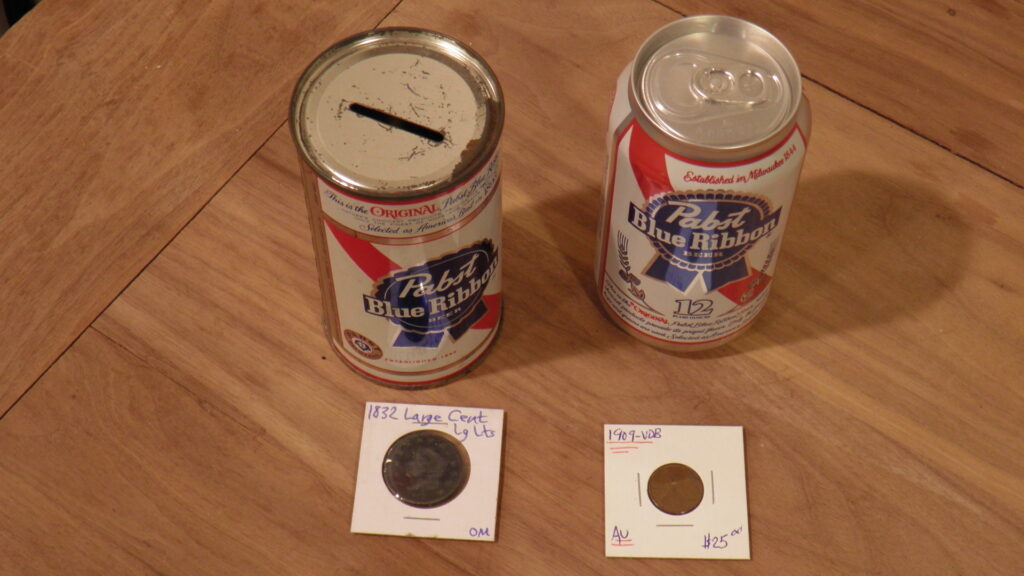
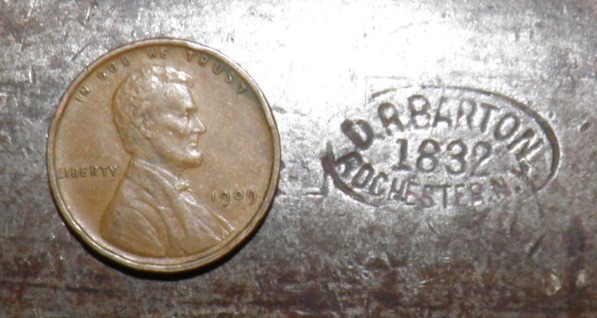
Collecting coins used to be a hobby and when it comes to coins, the first one that ever truly meant something to me was the 1909 Lincoln Penny. I grew up with the newest Lincoln pennies in my pockets, and in my mind, if you didn’t have a 1909 in your collection book, you didn’t really have a complete set. That coin was the starting point of the cornerstone of a passion.
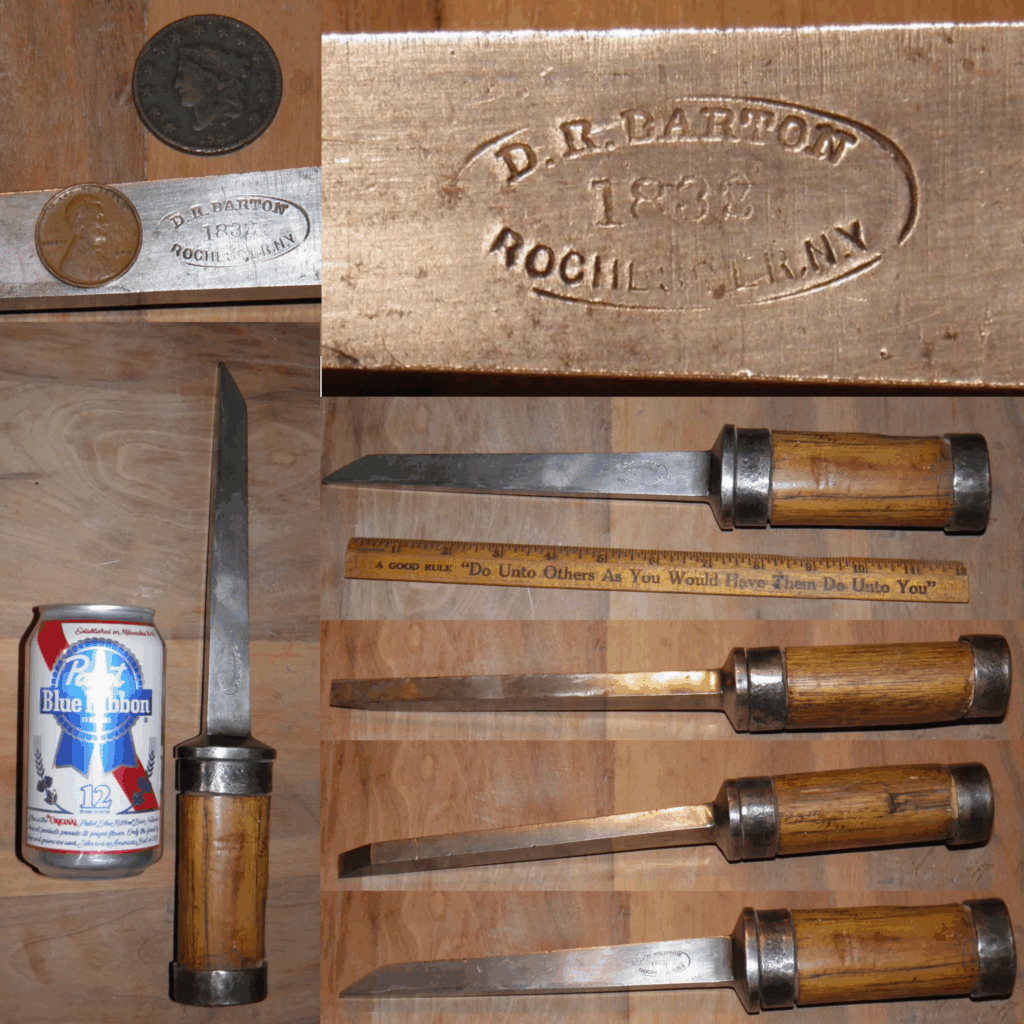
Gauges > Cans & Coins – Pabst Blue Ribbon Cans, 1909 Lincoln Penny, 1832 Large Cent
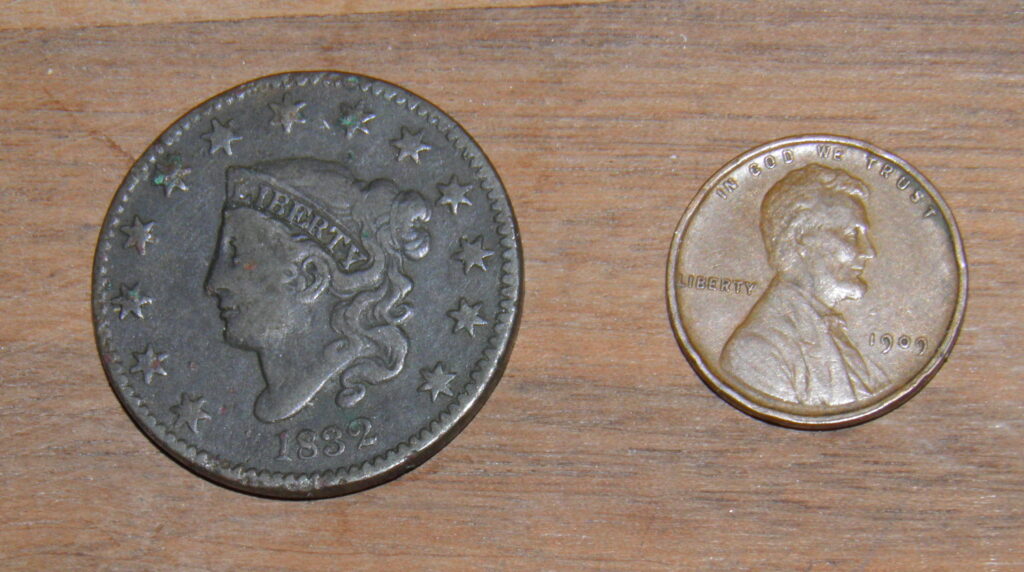
For this little experiment the next in line for me a tribute to American coinage history would be the 1832 American Large Cent, Coronet Variety. Something about its size and design captures a time that feels almost mythical now. These coins aren’t just collectibles; they’re time machines. D. R. Barton was established in 1832 and these coins were exchanged for his tools.
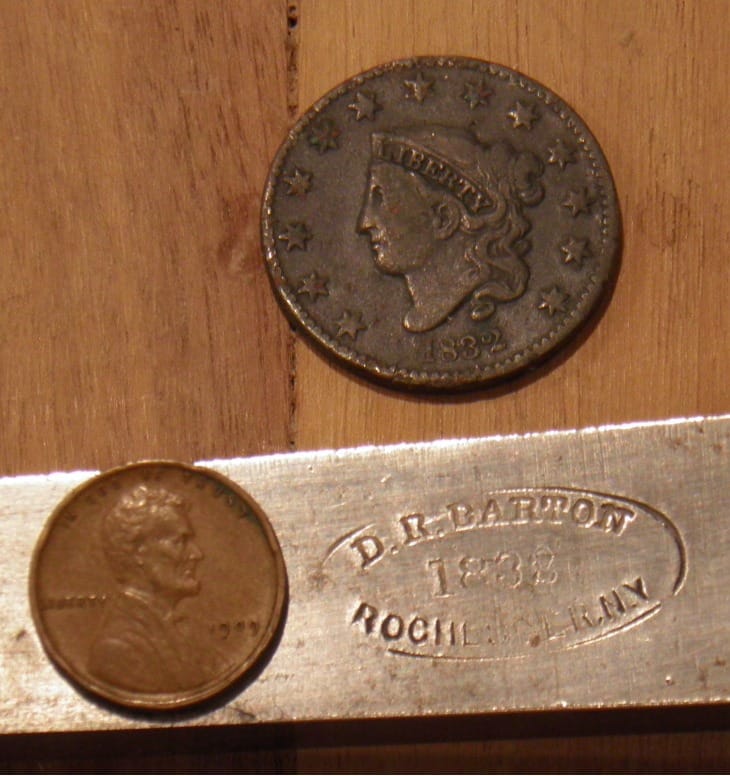
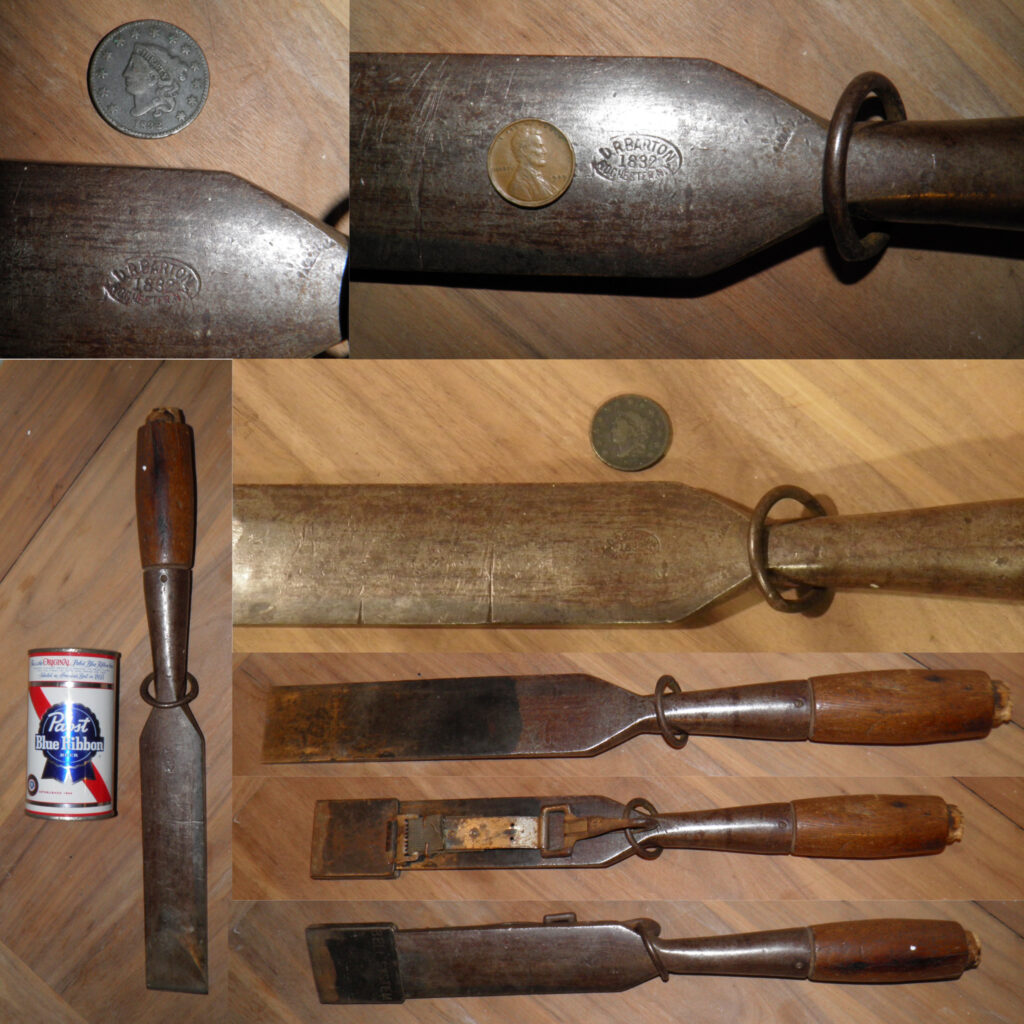
Today, I’m going to use these coins in a slightly different way. The Lincoln Penny, known by nearly everyone, is now a reliable tool for me—a simple and familiar way to gauge, measure, or size logos, especially D. R. Barton’s Oval and Banner style trademarks. Everyone knows the size of a penny, so using it in design gives me a universal standard.
Props used to gauge the size and characteristics of Tools. Gauges > Coins – 1909 Lincoln Penny, 1832 Large Cent
I’ve even expanded this idea by incorporating the 1832 Large Cent into my gauge collection. Its bold presence makes it perfect for certain measurements where the Lincoln Penny falls short.
Alongside these coins, other quirky tools have found a place in my workspace: a PBR beer can bank, a 2025 PBR beer can – full, a 12” Kind Hearted ruler and a 48″ measuring rule. Each item brings its own story, but the Lincoln Penny remains the anchor. Most as a measuring tool and use of the 1832 Large Cent as a reminder of when it all began.
Determining the exact timeline of the trademarks used on D. R. Barton chisels remains a challenge. No definitive, authoritative source detailing the sequence of Barton’s logos is currently known, and research opportunities, such as consulting archives at the Rochester, NY Public Library, remain unexplored. Observations based on available examples reveal inconsistencies, suggesting that the evolution of Barton’s trademarks does not follow a simple, linear progression.
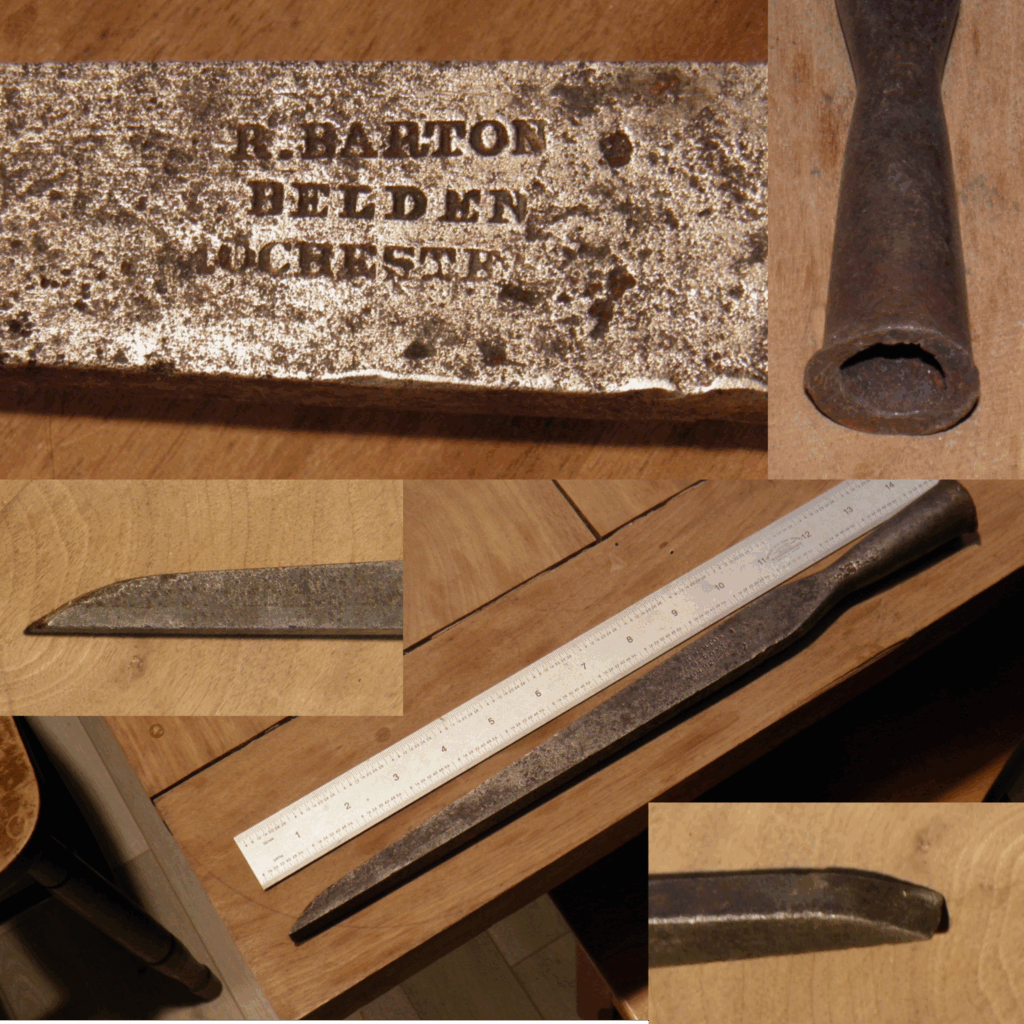
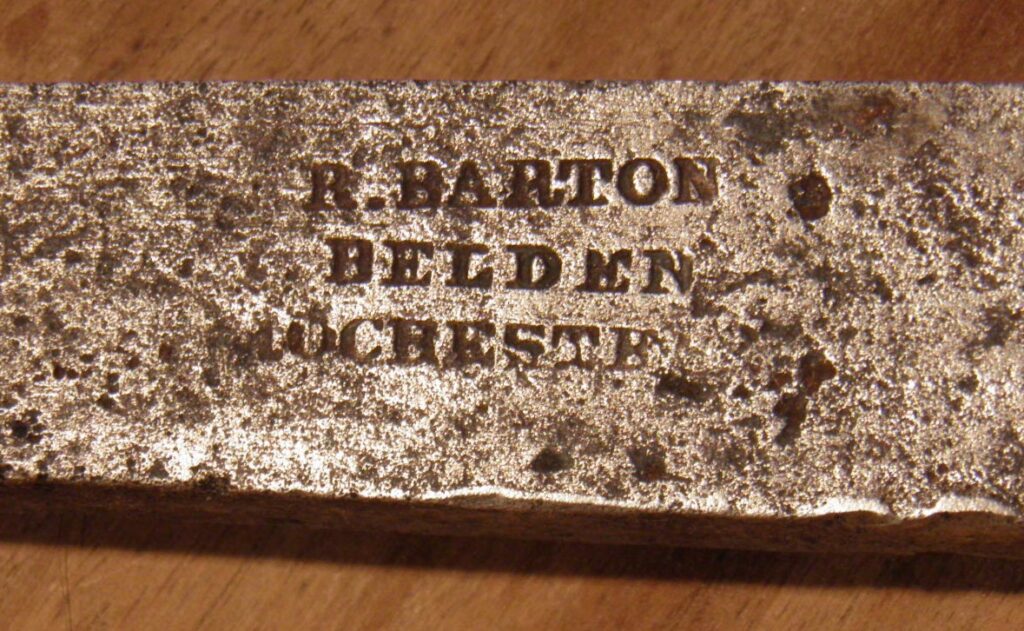
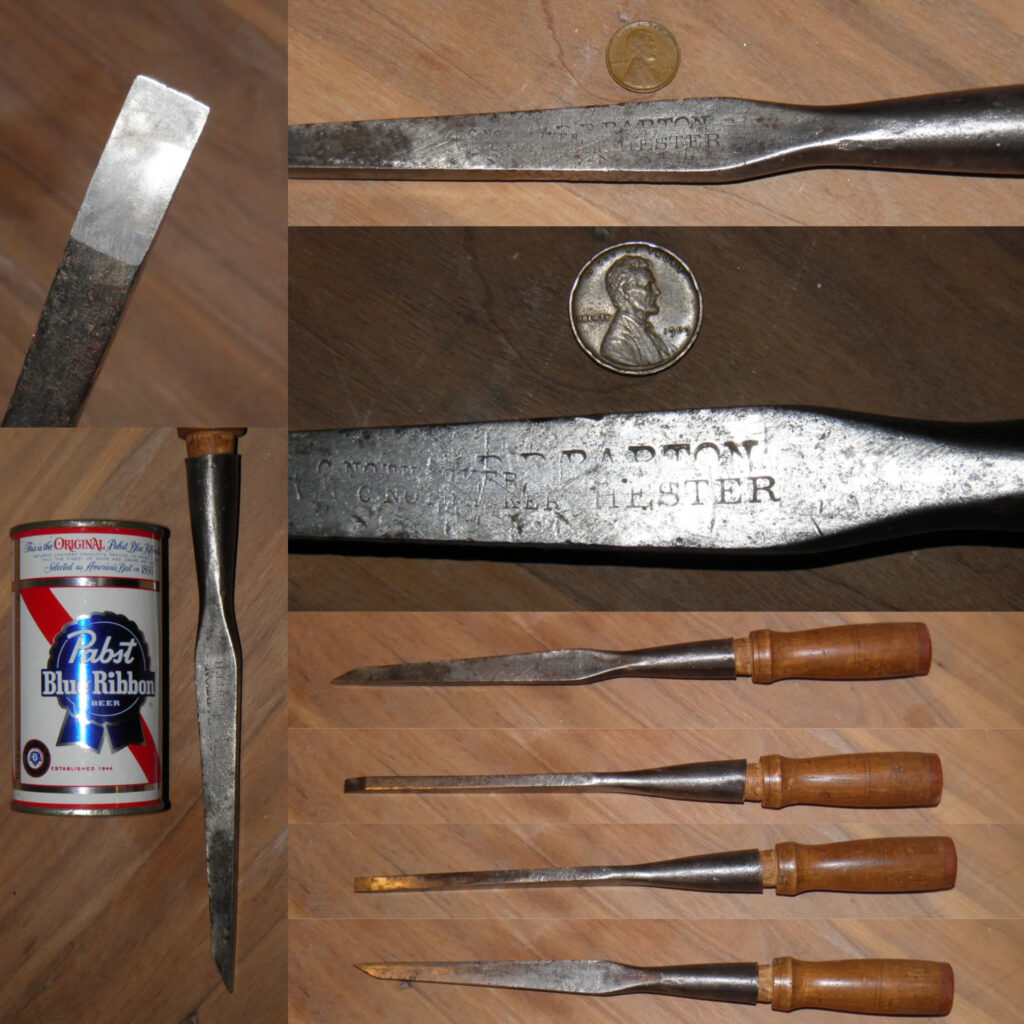
Historical records show that David R. Barton moved to Rochester, New York, on July 4, 1824, to learn nail-making, and by 1832, he had established his own edge tool business. During the early years, Barton is believed to have partnered briefly with individuals such as Belden, who later worked for Barton as a blacksmith. This period marks the earliest stage of Barton’s manufacturing history.
Early works of D. R. Barton in partnership with Belden
3 Line Straight Script D. R. Barton Belden Rochester
1/2″ Heavy Socket Mortising Chisel
14 1/2″ Hammered Socket >1844 Belden would later be one of Barton’s Blacksmiths.Two Script Lines D. R. BARTON ROCHESTER 7/16″ Mortising Chisel Overall Length 6″ Blade 81/2″ Long
Early Markings:
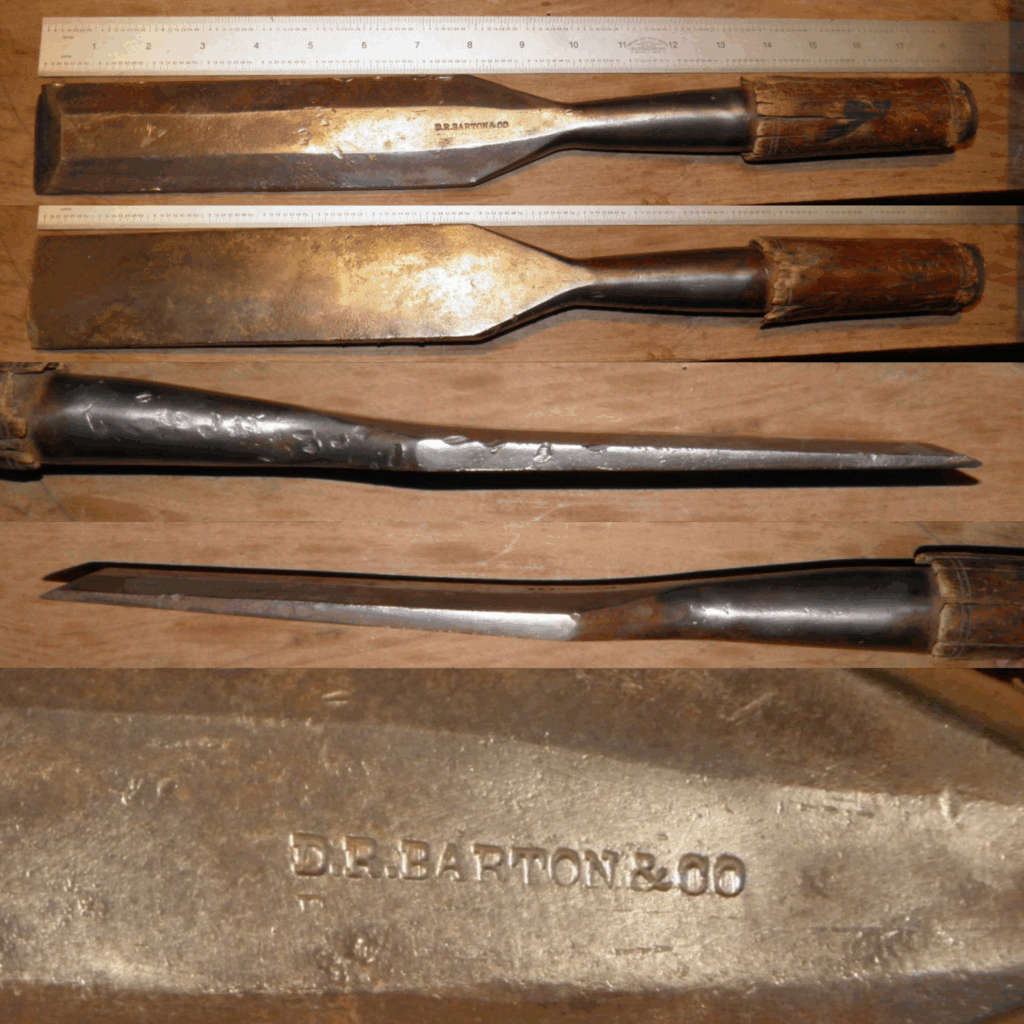
The earliest Barton trademarks appear to feature simple, often single- or double-line script. Some early stamps reference partnerships like Belden or Smith. Chisels from this era are typically robust and large, suggesting that Barton and his contemporaries were experimenting with practical tool proportions. These early tools predominantly used a tang design, aligning with the historical timeline: socket chisels were patented several years after the onset of American edge tool manufacturing. Although some suggest that socket chisel designs existed informally before their patenting, tangible evidence remains limited.
Basic Artistry of D. R. BARTON & CO – one straight script lines D. R. Barton & Co 2″ Heavy Socket Beveled Chisel Overall Length 17 1/2″ Blade 8″ Lg
The “Banner Logo”:
The second identifiable phase in Barton trademarks is what can be referred to as the “Banner Logo” — a ruffled-frame design maintaining a two-line format. Competitive pressure among toolmakers at the time likely influenced the stylistic similarities across manufacturers. Features from the earliest chisels, such as robust proportions, appear to persist into the Banner Logo period, suggesting it represents a second generation of Barton markings.
The Oval Trademark:
The third and perhaps most widely recognized Barton trademark is the Oval Logo. Early examples of the oval stamp omit the established “1832” inscription, implying they may predate the more standardized versions. Later versions of the oval logo include the date of 1832, suggesting a transition toward a more formal brand identity. Variations in font and size within the oval stamps indicate a long period of use. Smaller chisels sometimes feature an arch-shaped variation, possibly reflecting changes in manufacturing techniques and product scaling over time.
Oval D. R. Barton 1832 Rochester N. Y. 2″ Heavy Socket Framing Chisel Overall Length 8″ Blade 17 1/2″ LgOval D. R. Barton 1832 Rochester N. Y. 2″ Heavy Socket Framing Chisel 2025
Later Developments and Mack Tool Company Era:
By the time the Mack Tool Company was producing Barton chisels, additional distinguishing marks — including circles, flowers, and inverted “V”s — began appearing alongside the oval trademark. These added symbols may have served to differentiate production periods or indicate different product lines. Changes in the appearance of the trademarks, such as cleaner impressions and more standardized fonts, suggest that manufacturing had become increasingly industrialized.
Conclusion:
While much about the precise evolution of D. R. Barton’s trademarks remains speculative, available evidence supports a general progression:
1. Early script trademarks (some with partner names),
2. The Banner Logo,
3. The Oval Logo (with and without the established “1832” date),
4. Later modified oval and arch designs during the Mack Tool Company era.
David R. Barton’s contributions to American toolmaking are significant. His company’s extensive offerings — including chisels, gouges, carving tools, and planes — reflect a vision of innovation and craftsmanship. Although definitive documentation is lacking, studying Barton’s legacy through his trademarks provides valuable insights into the evolution of American industrial artistry.
Oval D. R. Barton 1832 Rochester N. Y. 7/16″ sticker Chisel 2025